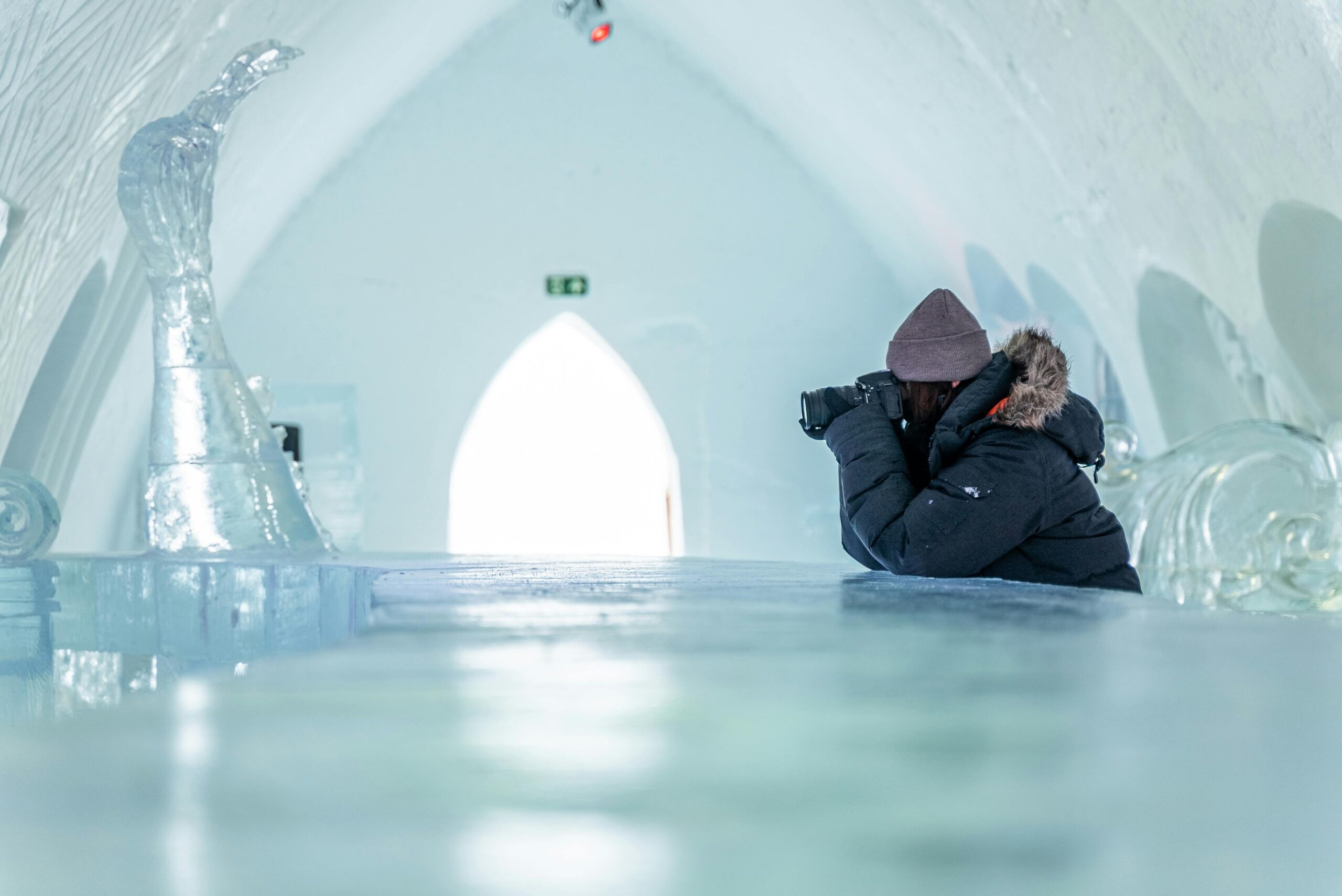
Navigating the polar wilderness demands precision, experience, and respect for one of Earth’s most unforgiving environments. Every decision can mean the difference between success and survival.

🧭 The Fundamental Challenge of Polar Navigation
The Arctic and Antarctic regions present navigators with challenges unlike any other environment on Earth. Traditional navigation methods that work reliably at lower latitudes become complicated or entirely unreliable near the poles. Magnetic compasses behave erratically as you approach the magnetic poles, GPS signals can be intermittent or less accurate, and the featureless white landscape offers few natural landmarks for orientation.
Understanding these unique challenges forms the foundation of successful polar navigation. The extreme cold affects electronic devices, reducing battery life and causing screens to malfunction. Whiteout conditions can disorient even experienced travelers within minutes. Ice movement, particularly on sea ice, means that waypoints and routes can literally shift beneath your feet. These factors combine to create an environment where multiple redundant navigation systems aren’t just recommended—they’re essential for survival.
Understanding Polar Geographic Peculiarities
The convergence of meridians at the poles creates unique navigational complications. Unlike equatorial regions where longitude lines remain relatively parallel over short distances, at high latitudes they converge rapidly. This means that traditional grid navigation becomes increasingly problematic. A one-degree change in longitude at the equator represents approximately 111 kilometers, but near the poles, this distance shrinks dramatically.
Polar navigators must also contend with the phenomenon of magnetic declination, which becomes extreme at high latitudes. The difference between true north and magnetic north can vary wildly, sometimes exceeding 30 degrees or more. In some polar locations, compass needles may point nearly perpendicular to true north, rendering standard compass navigation nearly useless without significant corrections.
❄️ Essential Navigation Tools for Icy Expeditions
Modern polar navigation relies on a carefully selected combination of traditional and contemporary tools. No single device can be trusted completely in polar conditions, making redundancy your most important safety principle. Each navigation method serves as a backup for the others, creating a web of reliability that can withstand equipment failures, extreme weather, and human error.
GPS Systems and Satellite Technology
GPS remains the primary navigation tool for modern polar expeditions, but with important caveats. Satellite coverage at extreme latitudes is less dense than at the equator, and the angle at which satellites appear above the horizon is lower, potentially causing signal degradation. High-quality GPS units designed for polar use incorporate algorithms that compensate for these factors.
Battery management becomes critical in cold environments. Lithium batteries perform significantly better than alkaline ones in freezing temperatures, but even these can lose 50% or more of their capacity when exposed to temperatures below -20°C. Keeping GPS units close to your body, using external battery packs stored in insulated pouches, and carrying multiple backup power sources are essential strategies.
Traditional Navigation Methods That Never Fail
Despite technological advances, traditional navigation skills remain invaluable in polar regions. Sun compasses, which use the sun’s position rather than magnetic fields, provide reliable directional information when the sun is visible. These simple devices work by casting a shadow on a calibrated dial, allowing you to determine true north regardless of magnetic interference.
Celestial navigation using the sun, moon, and stars offers another reliable backup system. In the Arctic summer, the sun circles the horizon without setting, providing constant positional information for those trained in solar navigation techniques. During polar winter, the stars become valuable navigation aids, with constellations like Ursa Minor pointing toward Polaris in the Northern Hemisphere.
🗺️ Route Planning in Frozen Landscapes
Successful polar navigation begins long before you set foot on the ice. Comprehensive route planning involves analyzing terrain features, understanding ice conditions, identifying potential hazards, and establishing contingency plans for every conceivable scenario. The immutable nature of polar environments means that flexibility must be built into rigid planning.
Analyzing Terrain and Ice Conditions
Satellite imagery and remote sensing data provide crucial information for route planning. Modern expeditions utilize NASA’s MODIS imagery, European Space Agency data, and specialized polar research databases to assess ice conditions weeks before departure. These resources reveal ice thickness, crack patterns, pressure ridges, and open water leads that could block or facilitate passage.
Seasonal timing profoundly affects route selection. In the Arctic, sea ice reaches maximum thickness in March and April, providing the most stable platform for travel. However, this period also coincides with extreme cold and reduced daylight. Summer travel offers milder temperatures and continuous daylight but brings the risk of melting ice, increased water hazards, and unstable snow bridges over crevasses.
Waypoint Strategy and Checkpoint Planning
Establishing a comprehensive waypoint system creates a navigational framework for your expedition. Primary waypoints should be set at major terrain features, supply cache locations, and decision points where route options diverge. Secondary waypoints fill the gaps between primary points, typically spaced at distances you can reliably travel in two to four hours.
Each waypoint should include not just coordinates but detailed descriptions of expected conditions, alternative routing options if the primary route becomes impassable, and specific hazards to watch for in the vicinity. This information proves invaluable when GPS signals fade or whiteout conditions eliminate visibility.
⚠️ Hazard Recognition and Risk Management
The polar wilderness conceals numerous hazards beneath its pristine surface. Developing the skills to recognize and avoid these dangers separates successful expeditions from tragic ones. Understanding what to look for and how to interpret subtle environmental clues can prevent catastrophic mistakes.
Identifying Dangerous Ice Conditions
Thin ice represents one of the most serious hazards in polar navigation. On sea ice, color provides valuable clues about thickness—white ice typically indicates sufficient thickness, while gray or dark patches suggest thin ice or open water beneath a snow covering. Fresh ice appears darker and more transparent, while older, thicker ice shows white or slightly blue coloration.
Pressure ridges form where ice sheets collide, creating chaotic jumbles of ice blocks that can rise several meters high. These features present significant obstacles to travel, often requiring lengthy detours. However, they can also serve as useful landmarks in otherwise featureless terrain. Learning to recognize stable crossing points versus dangerous areas requires experience and careful observation.
Crevasse Detection and Navigation
On glaciers and ice sheets, crevasses pose lethal hazards that may be hidden beneath snow bridges. These fractures in the ice form predictable patterns based on glacier flow dynamics. Understanding where crevasses typically form—near ice falls, at the margins of glaciers, and in areas of flow compression or extension—allows navigators to anticipate danger zones.
Visible surface undulations, linear depressions, and changes in snow consistency all provide clues to hidden crevasses. Probing suspect areas with a pole before committing full weight, traveling roped together, and maintaining proper spacing between team members are essential safety protocols in crevassed terrain.
🌨️ Weather Reading and Condition Assessment
In polar regions, weather doesn’t just affect comfort—it directly impacts navigation capability and survival. Developing the ability to read weather patterns, anticipate changes, and make informed decisions about when to travel and when to shelter is fundamental to polar navigation mastery.
Understanding Polar Weather Patterns
Polar weather systems behave differently from those at lower latitudes. High-pressure systems can persist for weeks, bringing clear skies and extreme cold. Low-pressure systems, though less frequent, can generate sudden, violent storms. The katabatic winds that flow down from polar ice sheets can accelerate from calm to hurricane force within hours, creating whiteout conditions that make navigation impossible.
Cloud formations provide advance warning of approaching weather systems. Lenticular clouds indicate strong upper-level winds that may soon reach the surface. Rapidly lowering cloud bases and increasing wind speeds signal deteriorating conditions. Learning to interpret these signs allows navigators to seek shelter before conditions become critical or to push forward when weather windows open.
Whiteout Navigation Techniques
Whiteout conditions—where overcast skies, blowing snow, and white surfaces eliminate all contrast and depth perception—represent one of the most disorienting experiences in polar navigation. In severe whiteouts, you cannot distinguish the ground from the sky, cannot judge distances, and may not even perceive slope angles accurately.
When whiteouts occur, immediately reducing travel speed and switching to highly conservative navigation modes becomes essential. Some experienced polar travelers use the technique of watching their ski tips or snowshoe edges to maintain awareness of the snow surface. Others rely heavily on GPS bearing information, taking frequent position checks to ensure they’re maintaining their intended course. In many cases, the safest decision is to stop, establish a shelter, and wait for improved visibility.
📱 Digital Tools and Modern Navigation Apps
Technology has revolutionized polar navigation, providing tools that would have seemed miraculous to early explorers. However, using these tools effectively requires understanding their capabilities, limitations, and optimal application in extreme environments.
Specialized Mapping and Navigation Applications
Several applications have proven particularly valuable for polar navigation. Gaia GPS offers excellent offline mapping capabilities with topographic overlays specifically designed for wilderness navigation. The app allows you to download high-resolution maps before your expedition, create detailed route plans with waypoints, and track your progress even without cellular connection.
For serious polar expeditions, dedicated GPS units from manufacturers like Garmin remain the gold standard. The Garmin inReach series combines GPS navigation with satellite communication, allowing you to send and receive messages, trigger emergency SOS signals, and share your position with support teams regardless of cellular coverage. These devices use the Iridium satellite network, which provides true global coverage including polar regions.
Weather Forecasting and Condition Monitoring
Access to accurate weather forecasts dramatically improves decision-making in polar environments. Applications like Windy provide detailed weather models including wind speed and direction, temperature, precipitation, and cloud cover. Before departure, downloading forecast data for your entire expedition period allows you to identify optimal travel windows and potential storm periods.
Satellite communication devices enable regular weather updates during expeditions, allowing you to adjust plans based on evolving conditions. This real-time information access represents a significant safety advancement compared to historical expeditions that operated with limited or outdated weather information.
🎯 Advanced Navigation Techniques for Expert Travelers
Beyond basic navigation competency, certain advanced techniques separate truly skilled polar navigators from merely adequate ones. These methods require practice, experience, and often years of polar travel to master fully, but they provide significant advantages in challenging situations.
Dead Reckoning in Featureless Terrain
Dead reckoning—the practice of calculating your position based on a previously known location, travel speed, time, and direction—becomes invaluable when electronic systems fail or visibility eliminates landmarks. This technique requires maintaining accurate logs of travel bearing, estimating distance covered based on time and pace, and accounting for factors like wind drift and slope angles that affect actual track.
Skilled practitioners develop an intuitive sense of distance traveled by counting steps or ski strides, then converting these measurements to kilometers. Recording this information along with compass bearings at regular intervals creates a navigational record that allows position reconstruction even when primary navigation systems are unavailable.
Using Natural Indicators and Environmental Clues
The seemingly featureless polar landscape actually contains numerous subtle clues that trained observers can use for navigation. Sastrugi—wind-carved ridges in the snow surface—form perpendicular to prevailing wind directions. In regions with consistent wind patterns, these features provide reliable directional information.
Snow accumulation patterns around obstacles, the orientation of ice crystals, and even the behavior of drifting snow can indicate wind direction and help maintain bearing. Animals, though scarce in polar regions, follow predictable patterns related to food sources and habitat, providing additional navigational clues in some circumstances.
🏔️ Building Your Polar Navigation Skillset
Mastering polar navigation requires progressive skill development, starting with foundational abilities and advancing through increasingly challenging conditions. This learning process cannot be rushed—the stakes are too high for trial-and-error education in true polar environments.
Training Progressions and Skill Development
Begin your polar navigation education in controlled environments where mistakes carry minimal consequences. Winter camping in accessible cold regions allows you to practice cold-weather equipment management, basic navigation techniques, and emergency procedures while maintaining the option to retreat if problems arise.
Formal training courses offered by organizations specializing in polar education provide structured learning environments with experienced instructors. These programs typically cover GPS operation, map and compass skills, weather interpretation, hazard recognition, and emergency response protocols specific to polar conditions.
Learning from Historical Expeditions
Studying historical polar expeditions provides valuable lessons in both successful navigation strategies and catastrophic failures. Roald Amundsen’s meticulous planning, equipment testing, and route selection contributed to his successful South Pole expedition. Conversely, examining what went wrong in unsuccessful expeditions like Ernest Shackleton’s Endurance voyage or the tragic Scott expedition reveals how poor decisions, inadequate preparation, or bad luck can compound into disaster.
Modern navigators benefit from these historical lessons while also recognizing how technology has changed the equation. Satellite phones, GPS units, and weather forecasting capabilities provide safety margins unknown to early explorers, but they also create dependencies that can become liabilities when technology fails.
🎒 Emergency Navigation and Survival Scenarios
Despite careful planning and skilled execution, polar expeditions sometimes face equipment failures, unexpected conditions, or emergencies requiring immediate navigation solutions. Preparing for these scenarios mentally and practically can mean the difference between a challenging situation and a fatal one.
Navigation Without Electronic Devices
Imagine every electronic device fails simultaneously—batteries freeze, GPS units malfunction, and satellite phones stop working. This scenario, while unlikely with proper equipment management, remains possible in extreme cold. Your ability to navigate using only traditional methods determines whether you can continue your expedition or must activate emergency protocols.
Maintaining proficiency with map and compass navigation, practicing celestial navigation techniques, and developing strong dead reckoning skills create fallback capabilities that function regardless of technology. Carrying laminated paper maps, mechanical compasses, and written navigation notes ensures you retain navigation capability even in complete electronic failure scenarios.
Establishing Communication and Rescue Protocols
Before any polar expedition, establishing comprehensive communication protocols ensures that support teams can track your progress and initiate rescue operations if necessary. Regular check-in schedules, predetermined waypoints, and clear escalation procedures for overdue reports create a safety net that operates independently of your navigation systems.
Personal locator beacons (PLBs) and satellite messengers like Garmin inReach provide emergency communication capability that functions globally. Understanding how these systems work, knowing when to activate them, and practicing their use before emergencies occur ensures you can call for help when it’s truly needed.

🌟 The Path to Polar Navigation Mastery
Becoming truly proficient at polar navigation represents a journey rather than a destination. Each expedition teaches new lessons, reveals different challenges, and builds experiential knowledge that cannot be gained from books or courses alone. The most accomplished polar navigators remain humble students of their environment, recognizing that the icy wilderness always retains the capacity to surprise, challenge, and humble even the most experienced travelers.
Your journey toward polar navigation mastery begins with building foundational skills, progresses through increasingly challenging expeditions, and continues throughout your polar travel career. Embrace the learning process, respect the environment’s power, and never stop refining your abilities. The rewards—experiencing some of Earth’s most pristine and awe-inspiring landscapes while safely guiding yourself and others through them—justify every hour of preparation and practice.
The polar wilderness demands perfection not because it’s cruel, but because it’s honest. It responds to skill, preparation, and respect with safe passage and unforgettable experiences. Those who master its navigation challenges earn the privilege of traveling through landscapes unchanged since the dawn of time, following in the footsteps of legendary explorers while forging their own paths across the ice.