When disaster strikes without warning, the difference between comfort and crisis often lies in how well you’ve prepared. Redundancy in survival kits isn’t just smart planning—it’s essential insurance against the unexpected.

🎯 Why Redundancy Matters More Than You Think
Survival situations rarely unfold according to plan. Equipment fails, items get lost, and resources run out faster than anticipated. This reality underscores why building redundancy into your survival kit transforms it from a basic emergency stash into a genuinely reliable lifeline.
Redundancy means having backup systems, duplicate critical items, and multiple ways to accomplish essential survival tasks. It’s the principle that has kept astronauts safe in space, guided military operations through hostile territory, and helped countless outdoor enthusiasts survive unexpected emergencies.
Consider this scenario: your primary fire-starting method is a lighter. It gets wet, runs out of fuel, or simply malfunctions at the worst possible moment. Without a backup method like waterproof matches, a ferro rod, or a magnifying lens, you’re suddenly facing a cold night without warmth or the ability to purify water. That single point of failure could cascade into a life-threatening situation.
🔥 The Rule of Three: Your Survival Foundation
Experienced survivalists often follow the “rule of three” when building redundancy into their kits. This principle suggests having at least three different methods for accomplishing each critical survival task. The logic is simple: if one method fails and your backup also becomes unavailable, you still have a third option.
This approach applies across all essential survival categories: fire starting, water purification, shelter building, navigation, signaling for rescue, and food procurement. While carrying three of everything might seem excessive, the weight and space trade-off is minimal compared to the security it provides.
The beauty of the rule of three is its flexibility. Your three methods don’t need to be identical items. For fire starting, you might carry a lighter (convenient and quick), waterproof matches (reliable backup), and a ferro rod (works when wet and lasts thousands of strikes). Each method compensates for the weaknesses of the others.
Diversifying Your Survival Methods
True redundancy involves more than just duplicating items—it requires diversifying your approaches. Different methods work better under varying conditions, and having options that operate on different principles ensures you’re never completely without resources.
For water purification, you might include chemical tablets (lightweight and reliable), a portable filter (fast and convenient), and the knowledge to boil water effectively (requires only fire and a container). This diversity protects you whether you’re short on time, dealing with particularly contaminated water, or have lost part of your gear.
💧 Building Redundancy Across Essential Categories
Let’s examine how to implement redundancy across the core survival priorities that keep you alive in emergency situations. Each category demands careful consideration of which items and skills provide the most reliable backup systems.
Fire and Warmth Solutions
Fire remains one of humanity’s most critical survival tools, providing warmth, water purification, cooking capabilities, and psychological comfort. Yet fire-starting methods are particularly vulnerable to environmental conditions and equipment failure.
A well-redundant fire kit includes multiple ignition sources stored in different locations within your survival gear. Disposable lighters offer convenience but fail in extreme cold or when wet. Waterproof matches provide reliability in moisture but have limited quantities. Ferro rods work in any weather and last for thousands of strikes but require dry tinder and technique.
Don’t overlook alternative methods like magnifying lenses (useless at night or in cloudy conditions but requiring no consumables), battery-and-steel-wool combinations, or even traditional friction methods if you have the knowledge. Store different fire-starting tools in separate waterproof containers throughout your kit.
Water Acquisition and Purification
Water represents your most time-sensitive survival need after air and immediate shelter. You can survive weeks without food but only days without water, making redundancy in this category absolutely critical.
Your water strategy should include multiple purification methods: filtration systems that remove physical contaminants and many pathogens, chemical treatments that kill biological threats, and the knowledge to boil water effectively. Each method has distinct advantages and limitations.
Portable water filters work quickly and remove most dangers but can freeze and break or eventually clog. Chemical purifiers like iodine tablets are lightweight and reliable but require waiting time and leave an unpleasant taste. Boiling requires fuel and time but kills everything and works with improvised containers.
Consider also including methods for water collection: plastic sheeting for solar stills, metal containers for dew collection, and knowledge of natural water sources and their risks. The ability to both find and purify water through multiple methods dramatically increases your survival odds.
🧭 Navigation and Signaling Redundancy
Getting lost or being unable to signal rescuers can transform a manageable emergency into a fatal situation. Navigation and signaling equipment deserve significant redundancy investment because they directly impact whether you can reach safety or be found.
Finding Your Way Back
Modern GPS devices offer incredible precision and convenience, but they depend entirely on battery power and satellite signals. A quality compass requires no power and works anywhere, but only if you have the knowledge to use it effectively with a map. Natural navigation methods using the sun, stars, and landscape features require no equipment but demand clear skies and navigational knowledge.
Pack each navigation method in your kit along with printed maps of your area (digital maps disappear with dead batteries). Learn to triangulate your position using landmarks, understand how to follow terrain features to civilization, and practice these skills before you need them.
Making Yourself Visible to Rescuers
Even the best-prepared survivor needs rescue eventually. Multiple signaling methods ensure you can attract attention regardless of the time of day, weather conditions, or type of search party looking for you.
A comprehensive signaling system includes visual signals (signal mirror for sunny days, bright-colored cloth or panel for aerial searches, flashlight or strobe for night), audible signals (whistle that works when you’re too exhausted to shout, air horn if weight permits), and electronic signals (personal locator beacon or satellite messenger for serious backcountry travel).
Each signaling method works under different circumstances. Mirrors are visible for miles on sunny days but useless at night. Whistles carry farther than human voices but may not be heard over wind or distance. Electronic beacons summon professional rescue but require registration and battery power.
🏕️ Shelter and Protection Systems
Exposure to harsh weather kills faster than lack of water in many environments. Redundant shelter options protect you whether you’re dealing with rain, snow, sun exposure, or cold temperatures, and provide flexibility when your primary shelter plan fails.
Your shelter redundancy should include a quality emergency blanket or bivy sack (lightweight and waterproof but minimal insulation), a tarp or poncho (versatile for shelter construction and rainwear), and knowledge of natural shelter building (requires no equipment but demands time and energy).
Layer your protection systems thinking about both shelter from elements and insulation from ground cold. A tarp keeps rain off but does nothing for warmth. An emergency blanket reflects body heat but tears easily. Natural shelters provide wind protection but take time to construct. Together, these methods ensure you can stay dry and maintain body temperature.
🔧 Tools and Equipment Backups
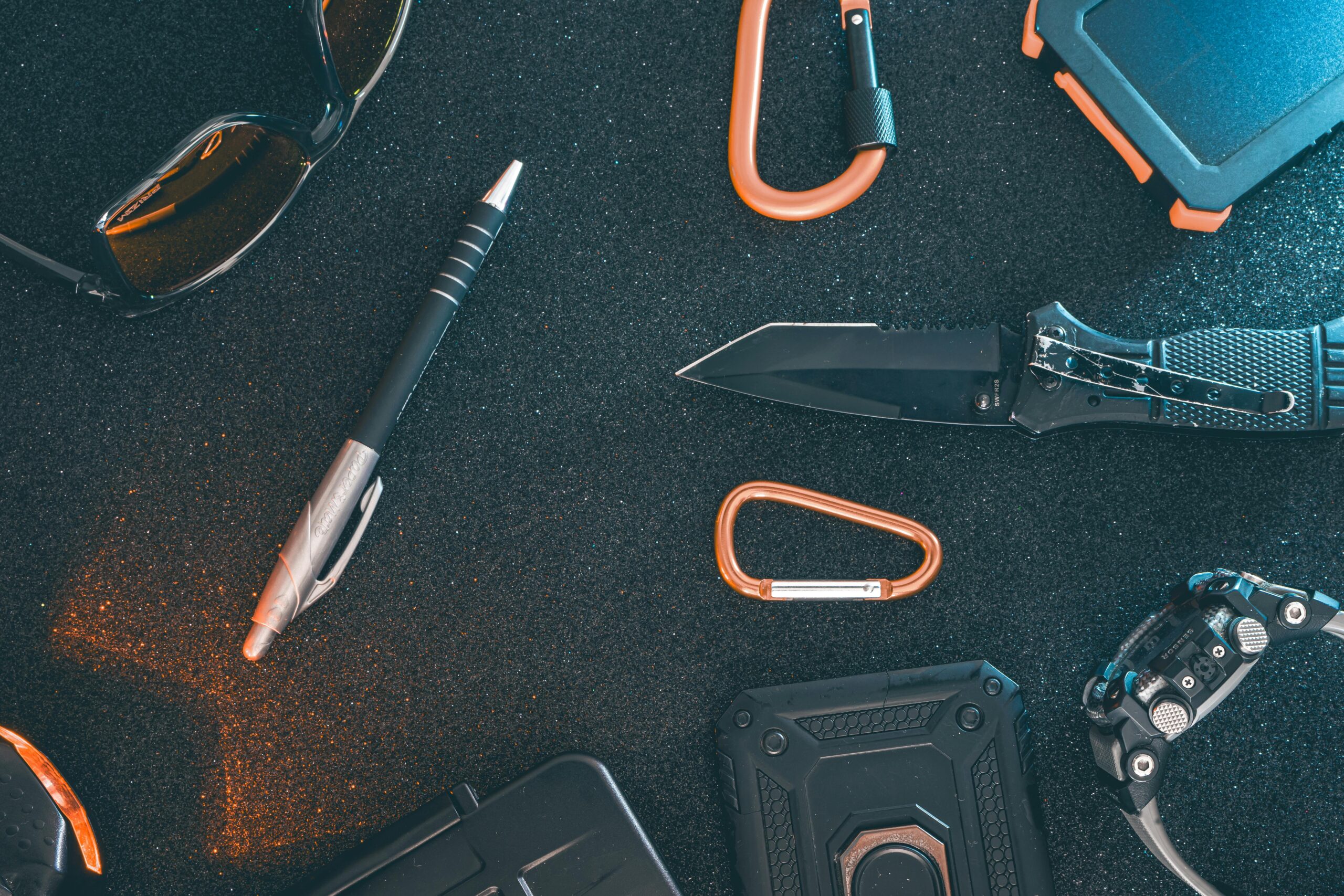
Multi-tools, knives, and other equipment enable you to process materials, build shelter, prepare food, and handle countless survival tasks. Tool redundancy protects these capabilities when equipment breaks or gets lost.
Cutting Tools and Their Backups
A quality fixed-blade knife serves as your primary survival tool, but knives can break, get lost, or be dropped into rushing water. Carry a backup folding knife in a different location, include a multi-tool with various implements, and consider a small razor blade stored safely for fine cutting tasks.
Different cutting tools excel at different tasks. Your primary knife handles batoning wood and heavy cutting. A folding knife works for food preparation and delicate work. Multi-tool attachments address specific needs like can opening or wire cutting. This diversity ensures you can handle any cutting challenge even with partial equipment loss.
Light Sources Through the Night
Darkness amplifies every survival challenge, making reliable light sources critical for safety, morale, and accomplishing necessary tasks. Light redundancy involves multiple devices, backup batteries or power sources, and alternative lighting methods.
A quality LED headlamp provides hands-free illumination but depends on batteries. Pack a small backup flashlight with different battery types to prevent a single battery failure from leaving you in darkness. Include chemical light sticks that never fail (but can’t be turned off once activated) and emergency candles that provide both light and warmth.
📱 Modern Technology in Survival Redundancy
Today’s smartphones pack incredible survival resources: GPS navigation, digital maps, compass functionality, flashlight, emergency calling, and survival information apps. Yet they represent a single point of failure when batteries die or devices break.
Treat your phone as one tool among many, not as your primary survival system. Carry a portable battery pack or solar charger to extend its usefulness, but never depend on it exclusively. Download offline maps and survival guides before heading into remote areas, and enable battery-saving modes to extend operational time.
Several survival apps provide valuable information when you need it most, offering everything from first aid instructions to edible plant identification. However, paper backup references don’t require power and can’t crash when you need them most.
⚡ Energy and Power Redundancy
Modern survival gear increasingly relies on battery power for critical functions. Flashlights, GPS units, satellite messengers, and phones all demand electricity, making power redundancy essential for extended emergencies.
Build your power redundancy strategy around multiple battery types, rechargeable options, and alternative power sources. Carry spare batteries for all critical devices, but recognize that batteries have limited lifespans and can fail in extreme cold.
Solar chargers provide renewable power in sunny conditions but become useless during extended storms. Hand-crank chargers work in any conditions but require physical effort and time. Prioritize which devices absolutely need power and ration your reserves accordingly.
🎒 Organizing Your Redundant Systems
Having redundant gear means nothing if everything is stored together and lost in a single mishap. Strategic organization distributes your backup systems to ensure you retain critical capabilities even with partial gear loss.
The Layered Distribution Approach
Organize your survival equipment in layers based on accessibility and importance. Keep immediate-need items like fire starters and emergency shelter on your person in pockets. Pack secondary backups in your day pack or main bag. Store tertiary systems in base camp equipment or vehicle stashes.
This layered approach means that even if you lose your main pack while crossing a stream, you still have fire-starting capability and emergency shelter on your body. If separated from base camp, your day pack contains enough redundancy to sustain you until rescue or return.
Waterproofing and Protection Strategies
The best redundancy planning fails if all your backup gear gets destroyed by a single soaking or hard impact. Protect your redundant systems by storing them in separate waterproof bags or containers throughout your gear.
Place one fire kit in a waterproof bag in your main pack, another in a pocket survival tin on your person, and a third in an external pouch. If your pack ends up in a river, you haven’t lost all fire-starting capability. This separation principle applies to every critical survival category.
🧠 Skills as Ultimate Redundancy
The most reliable redundancy isn’t gear—it’s knowledge and practiced skills. Equipment breaks, gets lost, or runs out, but skills remain with you always. Every survival kit should be backed up by the knowledge to improvise and adapt without specialized tools.
Learn primitive fire-starting methods like bow drills or hand drills. Practice building natural shelters from available materials. Study which wild plants are safe for water or food. Understand how to navigate by natural indicators. These skills weigh nothing, never break, and multiply the effectiveness of whatever equipment you do carry.
Regular practice keeps skills sharp and reveals gaps in your preparation. Deliberately practice survival tasks with only your backup methods, then with improvised tools, to build confidence in your redundant systems. This training identifies weaknesses before emergencies expose them.
💪 Testing and Maintaining Your Redundancy
Building redundancy into your survival kit represents only the first step. Regular testing and maintenance ensures your backup systems will actually function when needed, not just occupy space in your pack.
Schedule quarterly reviews of your survival gear. Test each fire-starting method. Replace expired water purification tablets. Verify that backup batteries hold charges. Confirm that emergency shelters have no tears or damage. This routine maintenance prevents the discovery that your backup plan failed months ago.
Challenge yourself to accomplish survival tasks using only your secondary or tertiary backup methods. Can you actually start a fire with that ferro rod you’ve been carrying for years? Does your backup compass work properly, and do you remember how to use it? Testing reveals which redundancies are truly functional versus which are just added weight.
🎯 Balancing Redundancy with Weight and Practicality
Unlimited redundancy sounds ideal until you try carrying it all. Every ounce matters when you’re hiking through challenging terrain, and there’s a practical limit to how much backup gear makes sense. Smart redundancy balances thorough preparation with realistic carrying capacity.
Prioritize redundancy for the most critical survival functions: fire, water, shelter, and signaling. These directly impact your survival odds and deserve the most backup planning. Less critical items might warrant only single backups or none at all.
Choose redundant items that serve multiple purposes. A bandana functions as a water filter, signaling device, cordage, wound dressing, and sun protection. A metal water bottle purifies water through boiling, serves as a cooking pot, and can signal with reflection. Multi-purpose items provide redundancy without proportional weight increases.
🌟 When Redundancy Saves Lives
The value of redundancy becomes crystal clear through real survival stories where backup systems made the difference between tragedy and successful rescue. Experienced outdoors people can share countless examples where their secondary fire-starting method saved them after their primary system failed, or where a backup signal device attracted rescuers after their first attempt went unanswered.
These scenarios aren’t theoretical. Weather changes suddenly, equipment fails at the worst moments, and simple accidents can cascade into serious emergencies. The person who survives isn’t necessarily the strongest or most experienced—it’s often the one who prepared redundant systems and had the resources to adapt when plans fell apart.
Building redundancy into survival kits acknowledges a fundamental truth about emergency situations: Murphy’s Law applies with particular force when your life depends on your gear. Whatever can go wrong will go wrong, and your ability to overcome those failures determines whether you face mild inconvenience or genuine danger.
🔄 Adapting Your Redundancy to Your Environment
Effective redundancy planning considers your specific environment and likely scenarios. Desert survival demands different backup systems than mountain winter survival. What constitutes critical redundancy varies dramatically based on climate, terrain, and season.
In wet environments, waterproofing and alternative fire-starting methods deserve extra redundancy. In cold regions, backup warmth layers and shelter options become critical. In desert areas, water purification and sun protection redundancy takes priority. Customize your backup systems to address the specific threats your environment poses.
Seasonal changes also affect redundancy needs. Summer hiking might require minimal backup warmth systems, while the same trail in winter demands extensive cold-weather redundancy. Adjust your kit as conditions change, always thinking about which failures would prove most dangerous in current circumstances.
🛡️ Your Resilience Through Preparation
Ultimately, building redundancy into survival kits isn’t about paranoia or over-preparation—it’s about respecting the unpredictable nature of emergencies and taking responsibility for your own safety. It’s the recognition that when you venture into challenging environments or face potential disasters, you become your own first responder.
The peace of mind that comes from genuine preparedness has value beyond the physical gear. Knowing you have backup systems for critical needs reduces anxiety, improves decision-making under stress, and allows you to take appropriate risks rather than either foolhardy chances or overly cautious limitations.
Start building redundancy into your survival kit today. Evaluate your current gear against the principles discussed here. Identify single points of failure and add appropriate backups. Practice using your redundant systems until they become as familiar as your primary tools. Most importantly, develop the skills that serve as ultimate redundancy when equipment fails entirely.
Remember that survival preparation is an ongoing journey, not a destination. As you gain experience, your understanding of necessary redundancy will evolve. Learn from each outing, adjust your systems based on real-world testing, and continuously refine your approach. The kit that keeps you prepared for anything is the one that grows and adapts with your knowledge and needs.