
The Arctic has long captivated explorers, challenging humanity’s limits and teaching timeless lessons through harrowing journeys that shaped modern expedition science and survival strategies.

🧭 The Frozen Classroom: What History’s Boldest Explorers Teach Us
For centuries, the Arctic has served as nature’s most unforgiving testing ground, where the finest explorers faced extreme conditions that pushed human endurance to its absolute limits. These historical expeditions weren’t merely adventures—they were laboratories of leadership, resilience, preparation, and human psychology under extraordinary stress.
From the doomed Franklin Expedition to Amundsen’s triumphant polar crossing, each Arctic journey left behind valuable insights that extend far beyond geographical discovery. These lessons resonate powerfully in our modern world, offering frameworks for business leadership, crisis management, team dynamics, and personal resilience that remain remarkably relevant today.
The Arctic’s brutal environment stripped away pretense and revealed fundamental truths about human nature, decision-making under pressure, and the critical factors that separate success from catastrophic failure. By examining these historical expeditions through a contemporary lens, we uncover principles that can transform how we approach challenges in our daily lives.
⚓ The Franklin Expedition: A Masterclass in Preparation Failures
Sir John Franklin’s 1845 expedition stands as perhaps the most famous cautionary tale in Arctic exploration history. With 129 men aboard two technologically advanced ships—HMS Erebus and HMS Terror—Franklin set out to navigate the Northwest Passage with what seemed like overwhelming advantages.
Yet the expedition vanished entirely, with all hands lost. Modern forensic analysis and archaeological discoveries have revealed critical missteps that offer powerful lessons about preparation, adaptability, and the dangers of overconfidence.
The Perils of Over-Reliance on Technology
Franklin’s ships represented cutting-edge Victorian technology, featuring steam engines, reinforced hulls, and advanced heating systems. This technological superiority bred a dangerous complacency—the crew believed their equipment would overcome any challenge the Arctic presented.
When ice conditions exceeded their technology’s capabilities, the expedition lacked adequate contingency plans. The lesson here transcends Arctic exploration: technology is a tool, not a guarantee. Modern organizations often make similar mistakes, over-investing in technical solutions while neglecting fundamental preparation, training, and adaptive capacity.
Ignoring Indigenous Knowledge
Perhaps Franklin’s gravest error was dismissing Inuit survival knowledge. The expedition carried tinned foods instead of learning local hunting techniques, wore wool uniforms rather than fur clothing, and followed rigid British naval protocols instead of adopting flexible Arctic survival strategies.
Inuit peoples had thrived in these conditions for millennia, but Victorian arrogance prevented Franklin’s crew from accessing this life-saving wisdom. This pattern—experts ignoring local knowledge in favor of imported theories—continues to undermine projects worldwide today.
🏆 Amundsen’s Triumph: Preparation Meets Humility
In stark contrast to Franklin, Norwegian explorer Roald Amundsen’s successful 1903-1906 Northwest Passage navigation and his 1911 South Pole expedition demonstrate what happens when preparation, cultural humility, and adaptive leadership align perfectly.
Amundsen’s philosophy centered on learning from those who already mastered polar survival. He lived among Greenlandic Inuit communities, learning their clothing techniques, dog-sledding methods, and igloo construction. This cultural openness became his competitive advantage.
Strategic Planning and Realistic Assessment
Amundsen meticulously studied previous Arctic failures, identifying patterns and avoiding predecessors’ mistakes. He chose smaller teams, prioritized mobility over technological complexity, and established supply depots well in advance—demonstrating that thorough preparation beats impressive equipment.
His realistic risk assessment contrasted sharply with the hubris that doomed other expeditions. Amundsen never underestimated the Arctic; he respected it profoundly and planned accordingly. This principle applies universally: success favors those who respect challenges rather than underestimate them.
Flexibility Within Structure
While Amundsen planned meticulously, he remained flexible when conditions changed. His willingness to adjust routes, modify timelines, and abandon original plans when circumstances demanded showed mature leadership—knowing when to persist and when to pivot.
This balance between disciplined preparation and adaptive execution represents perhaps the most transferable lesson from Amundsen’s success. Organizations today struggle with this same tension: maintaining strategic vision while responding to changing conditions.
❄️ Shackleton’s Endurance: Leadership in Crisis
Ernest Shackleton’s 1914-1916 Imperial Trans-Antarctic Expedition failed in its geographical objective but succeeded spectacularly as a demonstration of crisis leadership. When his ship Endurance became trapped and eventually crushed by ice, Shackleton faced a seemingly impossible situation: 28 men stranded on drifting ice floes, thousands of miles from civilization, with no means of communication.
Remarkably, Shackleton brought every crew member home alive—an achievement that has made his leadership style a case study in business schools worldwide. His decisions during this crisis offer timeless lessons in managing teams through prolonged uncertainty.
Maintaining Morale Through Purposeful Activity
Trapped on the ice for months, Shackleton understood that psychological threats were as dangerous as physical ones. He maintained strict routines, organized entertainment, ensured fair food distribution, and kept everyone purposefully occupied. These deliberate actions prevented despair from taking root.
Modern research on prolonged stress validates Shackleton’s instincts: maintaining structure, ensuring perceived fairness, and preserving purpose are critical for psychological resilience during extended crises. Leaders facing organizational turbulence can apply these same principles.
Decisive Action in Critical Moments
When the ice situation became untenable, Shackleton made the gutsy decision to sail a small lifeboat across 800 miles of the world’s most dangerous ocean to reach help. This calculated risk—undertaken only after careful preparation and with selected crew—demonstrated decisive leadership when paralysis could have been fatal.
Knowing when to take bold action versus when to wait requires judgment that can’t be reduced to formulas. Shackleton’s decision-making process—gathering information, consulting trusted advisors, then acting decisively—provides a model for high-stakes choices.
🌡️ Physiological Lessons: Understanding Human Limits
Arctic expeditions advanced scientific understanding of human physiology under extreme stress. These discoveries have applications extending from athletic performance to medical treatment, revealing how our bodies adapt to extraordinary challenges.
Cold Adaptation and Thermal Regulation
Historical explorers learned through painful trial and error how the human body responds to extreme cold. Their experiences taught us about:
- Layering strategies that balance insulation with moisture management
- Caloric requirements in cold environments (often 5000-6000 calories daily)
- The psychological dimension of perceived versus actual temperature
- How frostbite develops and can be prevented through awareness
- The critical importance of protecting extremities and high blood-flow areas
These insights now inform not just polar expeditions but also winter sports, military operations, and outdoor recreation safety protocols worldwide.
Nutritional Requirements Under Stress
Early expeditions suffered tremendously from scurvy and other nutritional deficiencies. The gradual recognition that diet profoundly impacts performance in extreme environments led to nutritional science breakthroughs that benefit us all today.
Explorers learned that the Arctic demands dramatically different nutrition than temperate environments—higher fat content, more calories, and careful vitamin supplementation. These principles now guide dietary planning for athletes, military personnel, and anyone facing prolonged physical challenges.
🧠 Psychological Resilience: The Mental Game
Perhaps the most valuable lessons from Arctic expeditions concern psychology rather than physiology. The mental challenges of isolation, monotony, extreme stress, and constant danger tested explorers in ways that reveal universal truths about human resilience.
The Importance of Psychological Screening
Later expeditions learned from earlier disasters that technical competence alone doesn’t predict success in extreme environments. Psychological compatibility, emotional stability, and stress tolerance matter enormously when small groups face prolonged hardship together.
Modern space programs directly inherited this insight from Arctic exploration. NASA’s astronaut selection process emphasizes psychological factors because Arctic expeditions proved that interpersonal dynamics can make or break missions in isolated, high-stress environments.
Coping Strategies for Prolonged Adversity
Successful Arctic explorers developed mental techniques for managing extended hardship:
- Breaking overwhelming challenges into manageable daily objectives
- Maintaining future-oriented thinking despite present suffering
- Finding meaning and purpose beyond mere survival
- Cultivating humor and lightness despite circumstances
- Establishing routines that provide psychological anchoring
- Practicing acceptance of uncontrollable factors
These strategies weren’t formalized psychological techniques—they were survival instincts that modern psychology has since validated and systematized. They work equally well for anyone facing prolonged difficulty, from serious illness to career setbacks.
📊 Comparing Expedition Outcomes: What Made the Difference?
When we compare successful and failed Arctic expeditions, clear patterns emerge that help us understand what separates triumph from tragedy:
| Success Factor | Failed Expeditions | Successful Expeditions |
|---|---|---|
| Cultural Attitude | Dismissed indigenous knowledge | Learned from local expertise |
| Technology | Over-relied on equipment | Balanced tech with fundamentals |
| Leadership Style | Rigid, hierarchical | Adaptive, participatory |
| Risk Assessment | Underestimated dangers | Realistic, respectful of environment |
| Team Selection | Technical skills only | Psychological compatibility prioritized |
| Contingency Planning | Minimal backup plans | Multiple alternative strategies |
This comparison reveals that success in extreme environments depends less on raw resources or technical superiority than on wisdom, humility, adaptability, and human factors—lessons with obvious applications far beyond polar exploration.
🌍 Modern Applications: Arctic Lessons in Contemporary Life
The valuable lessons from historical Arctic expeditions aren’t mere historical curiosities—they offer practical frameworks for navigating our complex modern world.
Business and Organizational Leadership
Corporate leaders increasingly study Arctic expeditions for insights into crisis management, team building, and strategic planning. Shackleton’s leadership during the Endurance expedition appears in countless business curricula because his challenges mirror modern organizational crises: uncertainty, resource constraints, team morale under pressure, and high-stakes decision-making.
The preparation-versus-flexibility balance that Amundsen mastered resonates with companies navigating disruptive markets. The Franklin disaster warns against technological hubris—a lesson particularly relevant as organizations implement AI and automation without adequate strategic thinking.
Personal Development and Resilience
At the individual level, Arctic expedition lessons translate into powerful personal development principles. The psychological resilience strategies explorers developed help people cope with serious illness, career setbacks, personal losses, and other prolonged adversities.
The Arctic teaches that resilience isn’t about toughness alone—it’s about realistic assessment, adequate preparation, acceptance of uncontrollable factors, finding meaning in struggle, and maintaining hope while acknowledging difficulty. These balanced perspectives offer healthier approaches than toxic positivity or defeatist pessimism.
Environmental Awareness and Climate Change
Historical Arctic records provide valuable baseline data for understanding climate change. Comparing ice conditions, wildlife populations, and seasonal patterns from early expeditions to today’s Arctic reveals dramatic environmental shifts that might otherwise be dismissed as natural variation.
Moreover, the Arctic’s fragility—so evident to early explorers—foreshadowed our current environmental crisis. Their descriptions of the delicate Arctic ecosystem remind us what we risk losing and why preservation matters urgently.
🔭 Looking Forward: The Arctic’s Continuing Lessons
The Arctic remains a frontier of exploration and discovery, though modern expeditions differ dramatically from their historical predecessors. Today’s Arctic research focuses on climate science, ecology, and understanding how rapidly warming temperatures transform polar regions.
Contemporary Arctic work continues validating historical lessons while generating new insights. Modern researchers emphasize sustainability, international cooperation, and indigenous partnership—approaches earlier explorers tragically neglected. This evolution demonstrates our capacity to learn from past mistakes.
The fundamental challenges remain remarkably consistent: extreme environment, isolation, resource constraints, and the need for careful planning combined with adaptive execution. Whether exploring Mars or developing artificial intelligence, humanity faces challenges structurally similar to Arctic exploration—making those historical lessons perpetually relevant.
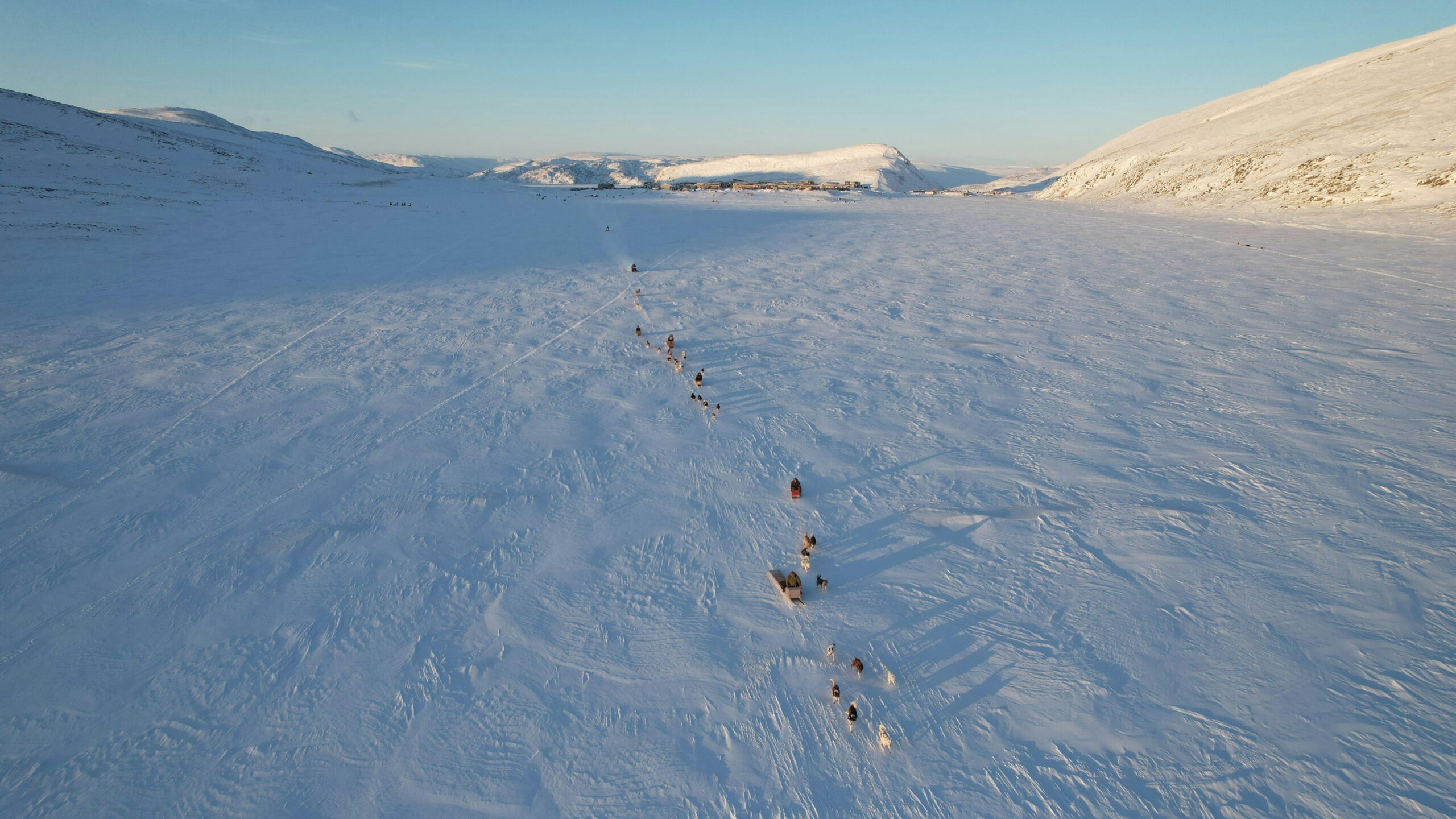
🎯 Integrating Arctic Wisdom Into Daily Life
The powerful lessons from Arctic expeditions shouldn’t remain abstract principles—they can inform how we approach everyday challenges, both large and small.
When facing major decisions, apply Amundsen’s preparation philosophy: research thoroughly, learn from others’ mistakes, respect the challenge, and plan meticulously while remaining flexible. When leading teams through difficulty, channel Shackleton’s focus on morale, fairness, purposeful activity, and decisive action at critical moments.
When confronting prolonged hardship, remember the psychological strategies that kept explorers sane during Arctic winters: break overwhelming challenges into daily objectives, maintain routines, find meaning beyond mere survival, cultivate humor, and accept what you cannot control.
The Arctic taught us that human limitations are real but more elastic than we imagine, that preparation and wisdom often matter more than resources, that cultural humility beats arrogant expertise, and that leadership in crisis requires both psychological insight and decisive courage.
These aren’t just historical curiosities from frozen wastelands—they’re timeless principles for navigating life’s inevitable difficulties with greater wisdom, resilience, and effectiveness. The Arctic’s harshest lessons become our most valuable teachers when we have the humility to learn from those who ventured into the ice and either triumphed or perished trying. Their experiences, purchased at tremendous cost, offer us guidance for our own journeys through challenging terrain—whether literal or metaphorical.