Navigating frozen landscapes demands more than courage—it requires proven strategies, cutting-edge technology, and lessons learned from those who’ve conquered Earth’s most unforgiving environments.

🧭 The Foundation of Cold-Terrain Navigation Success
Cold-terrain navigation represents one of humanity’s most challenging endeavors, where miscalculation can mean the difference between triumph and tragedy. From Antarctic expeditions to Arctic military operations, understanding how experts navigate these hostile environments provides invaluable insights for modern adventurers, researchers, and professionals working in extreme conditions.
The landscapes we’re discussing aren’t merely cold—they’re dynamic, deceptive, and constantly changing. Ice shifts beneath your feet, whiteout conditions erase horizons, and magnetic compasses behave erratically near polar regions. These challenges have forced navigators to develop multi-layered approaches that combine traditional wayfinding with modern technology.
What makes certain navigation strategies successful while others fail? The answer lies in meticulous preparation, adaptive thinking, and learning from those who’ve already walked—or struggled—through these frozen worlds. Let’s examine real-world case studies that reveal the secrets behind successful cold-terrain navigation.
❄️ Case Study One: The Norwegian Arctic Battalion’s Multi-Sensor Approach
Norway’s Porsangermoen-based Arctic Battalion operates in conditions where GPS signals frequently fail, compasses spin unpredictably, and visibility drops to zero within minutes. Their navigation strategy has evolved through decades of polar operations, creating a redundancy-based system that has become the gold standard for military cold-terrain movement.
The battalion employs what they call the “Three-Layer Navigation Protocol.” The primary layer uses satellite navigation systems with WAAS (Wide Area Augmentation System) corrections, providing accuracy within three meters when signals are available. The secondary layer involves traditional map-and-compass work, but with specialized liquid-filled compasses designed to function in extreme cold and near-polar regions where magnetic variation can exceed 20 degrees.
The tertiary layer—often overlooked by less experienced teams—focuses on terrain association and natural navigation cues. Soldiers learn to read subtle topographical features, snow accumulation patterns, wind direction indicators, and even star positions during the long Arctic nights. This comprehensive approach means that when one system fails, two others remain operational.
Key Takeaways from Military Arctic Operations
- Never rely on a single navigation method in cold terrain
- Train extensively in reading micro-terrain features that remain visible in poor conditions
- Maintain equipment redundancy with backups stored at different body temperatures
- Establish communication protocols that work when electronic systems fail
- Practice navigation skills progressively, from good conditions to whiteout scenarios
🏔️ Case Study Two: The Trans-Antarctic Scientific Traverse
Between 2006 and 2008, an international team conducted extensive ground-penetrating radar surveys across Antarctica, traveling thousands of kilometers through some of Earth’s most featureless terrain. Their navigation challenges were unprecedented: no landmarks, no visible horizon during storms, and magnetic compass readings rendered useless near the South Magnetic Pole.
The team’s solution combined cutting-edge GPS technology with something remarkably low-tech: bamboo poles. Every five kilometers, they planted a marked bamboo pole that could be seen from approximately three kilometers away in clear conditions. This created a physical breadcrumb trail that guided them back even when electronic systems failed or whiteout conditions prevented satellite navigation.
They also employed inertial navigation systems (INS) typically used in aircraft and submarines. These gyroscope-based systems track movement relative to a starting point without external references. While they accumulate small errors over time, for short-term navigation during GPS outages, they proved invaluable.
The Power of Hybrid Navigation Systems
The scientific traverse demonstrated that successful cold-terrain navigation often requires marrying ancient techniques with modern technology. Their approach included:
- GPS receivers with external antennas mounted outside heated vehicles
- Regular position logging every 100 meters to create detailed track records
- Physical markers placed at strategic intervals
- Inertial navigation backup for GPS-denied environments
- Detailed meteorological monitoring to predict navigation-limiting weather
🎿 Case Study Three: Børge Ousland’s Solo Arctic Crossing
Norwegian explorer Børge Ousland’s 1994 solo, unsupported crossing of the Arctic Ocean stands as one of history’s most remarkable navigation achievements. Pulling a 180-kilogram sled across shifting sea ice, Ousland couldn’t rely on pre-marked routes or follow previous tracks—the ice itself moved, fractured, and reformed constantly beneath him.
Ousland’s navigation strategy centered on understanding ice drift patterns. He studied oceanographic data before departure, learning how wind, currents, and ice dynamics would affect his route. Rather than fighting the ice movement, he incorporated predictable drift into his navigation calculations, essentially using the moving ice as a conveyor belt when winds were favorable.
He carried multiple GPS units with solar charging capabilities, understanding that battery life diminishes dramatically in extreme cold. His backup navigation system included a sextant for celestial navigation and detailed charts marked with magnetic variation corrections. Most critically, he maintained a detailed journal documenting ice conditions, drift rates, and weather patterns—creating a navigation database he could reference throughout the journey.
Lessons from Solo Polar Expeditions
Ousland’s success reveals principles applicable to any cold-terrain navigation scenario:
- Understand environmental dynamics—don’t just navigate through terrain, navigate with it
- Power management is navigation management in cold environments
- Documentation creates a personal navigation database for decision-making
- Mental navigation skills prevent panic when technology fails
- Pre-expedition research of environmental conditions pays exponential dividends
📱 Modern Technology Transforming Cold-Terrain Navigation
Today’s cold-terrain navigators have access to tools previous generations could only imagine. Smartphone apps now offer sophisticated navigation capabilities, though they must be used judiciously in extreme environments where battery life and screen functionality become critical concerns.
Applications like Gaia GPS have revolutionized backcountry navigation by allowing users to download detailed topographic maps for offline use. This proves essential in cold terrain where cellular signals are absent and conserving battery life is paramount. The app’s ability to record tracks, mark waypoints, and overlay multiple map layers helps navigators maintain situational awareness even in challenging conditions.
However, technology alone never suffices. Successful cold-terrain navigators use apps as one component of a comprehensive strategy, never as a single point of failure. They carry battery banks, keep devices close to body heat, and maintain traditional navigation skills as backup.
🌨️ Weather Pattern Recognition as Navigation Tool
Experienced cold-terrain navigators develop an almost intuitive understanding of weather patterns and their navigation implications. This skill, often overlooked in favor of technological solutions, can mean the difference between reaching objectives safely and becoming disoriented in life-threatening conditions.
Antarctic field guides learn to recognize lenticular clouds forming over mountains 50 kilometers away, indicating approaching high winds. They observe snow crystal structures to determine recent temperature variations and predict upcoming weather changes. They note wind patterns etched into snow surfaces—sastrugi formations—that reveal prevailing wind directions, serving as natural compass indicators in whiteout conditions.
This meteorological awareness extends to understanding how weather affects navigation equipment. Knowing that LCD screens become sluggish or fail below certain temperatures, that battery capacity drops precipitously in extreme cold, and that moisture from breath can freeze over lenses and screens—all this knowledge informs navigation strategy adjustments.
⛺ Pre-Trip Planning: The Invisible Success Factor
Every successful cold-terrain navigation case study reveals extensive pre-trip planning that often exceeds the actual expedition duration. Sir Ernest Shackleton spent two years planning his Antarctic expeditions. Modern scientific teams spend months coordinating logistics, studying routes, and rehearsing contingencies.
Effective planning includes detailed route analysis using topographic maps, satellite imagery, and reports from previous expeditions. Navigators identify critical waypoints, potential hazards, emergency shelter locations, and bailout routes before ever entering cold terrain. They study magnetic declination charts, understand how solar activity might affect GPS reliability, and identify celestial navigation reference points.
Essential Pre-Trip Navigation Checklist
- Study detailed topographic maps of the entire route and surrounding areas
- Research historical weather patterns for the specific season and location
- Identify magnetic declination and understand compass correction requirements
- Plan primary route, alternate routes, and emergency evacuation options
- Establish communication protocols and check-in schedules
- Test all navigation equipment in cold conditions before departure
- Create physical and digital copies of all navigation resources
- Calculate distance, bearing, and estimated time between waypoints
🧊 Psychological Aspects of Cold-Terrain Navigation
The mental component of navigation in extreme cold often determines success or failure more than technical skills or equipment. Disorientation, panic, and decision fatigue affect even experienced navigators when faced with prolonged exposure to harsh conditions, limited visibility, and physical exhaustion.
Successful navigators develop mental frameworks that prevent panic during navigation challenges. They practice decision-making protocols that work even under stress. When faced with uncertainty about position or route, they follow established procedures: stop movement, shelter from wind, consult all available navigation resources systematically, make conservative decisions that prioritize safety over speed.
This psychological preparation includes accepting that cold-terrain navigation rarely proceeds perfectly according to plan. Weather delays, route modifications, and unexpected obstacles are normal rather than exceptional. Mental resilience comes from expecting adaptation rather than perfect execution.
🔋 Power Management as Critical Navigation Skill
In cold terrain, navigation capability directly correlates with electrical power availability. GPS devices, smartphones, satellite communicators, and headlamps all depend on batteries that lose 20-50% of their capacity in freezing temperatures. Managing this power becomes a fundamental navigation skill.
Experienced cold-terrain travelers carry lithium batteries rather than alkaline ones, as they perform better in cold. They keep spare batteries in interior pockets where body heat maintains performance. They use external battery packs, understanding that it’s easier to keep one large battery warm than multiple small ones. They turn off unnecessary device features, dim screens, and use airplane mode to conserve power.
Some expeditions now carry lightweight solar panels, though their effectiveness decreases during winter months at high latitudes. Others use chemical hand warmers strategically placed near battery compartments to maintain operating temperatures. The most prepared teams calculate total power requirements for worst-case scenarios, then carry 200-300% of that capacity.
🗺️ When All Systems Fail: Primitive Navigation Techniques
Every successful cold-terrain navigator maintains skills that function when all technology fails. These primitive techniques, refined over millennia by Arctic peoples, provide navigation capability with zero equipment dependency.
Direction finding using sun position remains effective even in overcast conditions—sunlight creates subtle brightness gradients in clouds that reveal solar azimuth. Star navigation works during long polar nights, with certain constellations providing reliable directional references. Snow and ice patterns reveal prevailing wind directions, while vegetation (where present) shows aspect and elevation through growth patterns and species distribution.
Perhaps most importantly, successful navigators develop what indigenous peoples call “the sense of the land”—an accumulated awareness of subtle environmental cues that together create a mental map even without visible landmarks. This skill develops only through experience and attentive observation during every journey.
🎯 Risk Assessment and Decision-Making Frameworks
Cold-terrain navigation demands constant risk assessment and decision-making under uncertainty. Professional teams use structured frameworks that reduce the influence of cognitive biases and group dynamics that can lead to poor navigation decisions.
The “STOP” protocol—Stop, Think, Observe, Plan—provides a simple framework for navigation decision points. When uncertainty arises, teams physically stop movement, think about the situation objectively, observe all available navigation cues and environmental factors, then plan the next action before proceeding.
More sophisticated risk assessment uses structured tools like avalanche terrain exposure scales (ATES) or custom-developed matrices that evaluate navigation confidence, weather conditions, team capability, and consequences of error. These frameworks force explicit consideration of factors that intuitive decision-making might overlook.
🌟 Integration: Building Your Personal Cold-Terrain Navigation System
The case studies we’ve examined reveal that successful cold-terrain navigation doesn’t follow a single methodology—it integrates multiple approaches into a comprehensive system tailored to specific conditions, objectives, and capabilities.
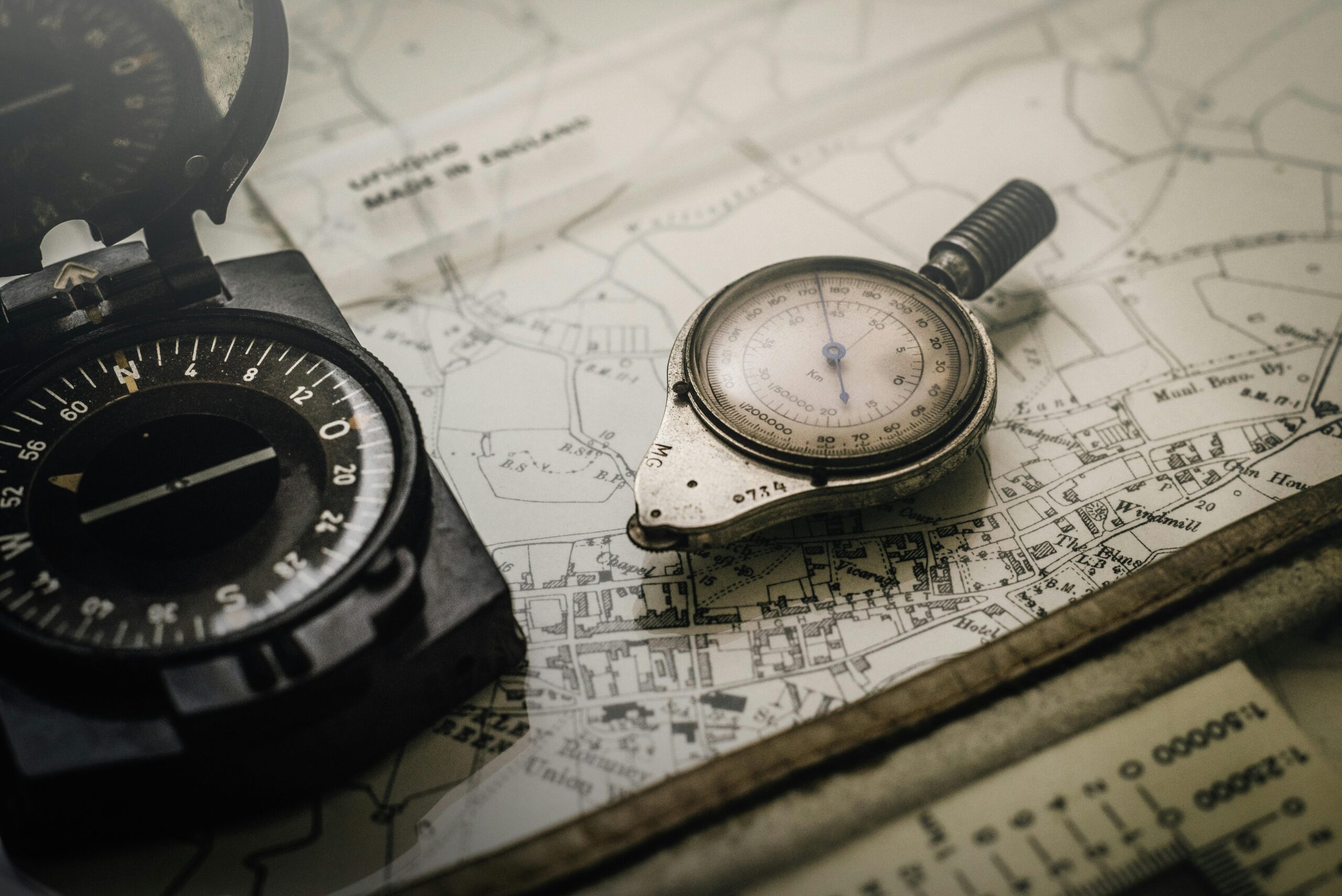
Your personal navigation system should include technical skills (map reading, compass work, GPS operation), environmental awareness (weather recognition, terrain assessment, ice and snow dynamics), equipment redundancy (primary, secondary, and tertiary navigation tools), psychological preparation (decision frameworks, stress management, realistic expectations), and physical conditioning (cold tolerance, endurance, efficiency of movement).
Most importantly, this system must be tested progressively in increasingly challenging conditions. Begin with day trips in cold conditions with clear weather and good visibility. Progress to overnight trips, poor weather navigation, and eventually challenging multi-day expeditions. Each experience adds to your personal navigation database, revealing what works for your specific circumstances and where improvements are needed.
🏆 The Path Forward for Cold-Terrain Navigators
Mastering cold-terrain navigation is a journey without a final destination. Technology continues evolving, climate change is altering familiar terrain and weather patterns, and personal capabilities develop with each expedition. The most successful navigators approach every journey as both an objective to accomplish and a learning opportunity that builds toward future challenges.
Start by studying the strategies revealed in these case studies, then adapt them to your specific circumstances. Invest in quality equipment and training. Practice fundamental skills until they become reflexive. Most critically, develop the judgment to know when to push forward and when conditions demand turning back—a decision-making capability that ultimately defines navigation mastery in the world’s coldest places.
The frozen landscapes that challenge us also reward us with experiences found nowhere else on Earth. With proper preparation, appropriate strategies, and respect for the environment’s power, cold-terrain navigation transforms from a daunting challenge into an achievable skill that opens access to our planet’s most spectacular wilderness areas.